Wolfe LLC
Eliminating 65% of support tickets by giving clients a self-service portal.

TIMELINE
ROLE
TOOLS
SKILLS
0%
0%
0%
0%
0
0
The Problem
Support dependency was throttling program growth
Wolfe offers digital gift card programs to businesses who use them as employee rewards. Clients didn't have a centralized system to manage these programs and they relied entirely on Wolfe's support team for routine tasks like account funding, updating user lists, permissions, and spreadsheet requests. This generated 120+ support tickets a month and dozens of hours spent on issues that should've been self-service.
💸
The cost
120+ support tickets and 45 hours a month. Support teams spent more time servicing routine requests than working on higher-priority stuff.
🎯
The ask
Build a self-service portal that gives clients direct control over their employee reward programs, without needing support for routine tasks.
⏳
The constraint
8 weeks to ship something usable. Couldn't build everything we wanted in this timeframe.
Research
Finding the real blockers
I interviewed stakeholders across executive, finance, and product teams and reviewed support tickets to understand where clients were getting stuck.
No single source of truth
This meant they couldn't answer basic questions like "Do we have enough budget for next quarter's campaign?" without waiting on support.Manual workflows created friction
This added 2-3 days to every transaction and blocked time-sensitive campaigns.Terminology was inconsistent
This created confusion about who could do what.
Mapping critical workflows
Based on research insights, I mapped the two highest-frequency workflows to identify friction points before building the UI.
Add Funds Flow — Clients previously emailed finance and waited 2-3 days for approval. I designed a direct funding path that removed the approval bottleneck while maintaining audit visibility.
Gift Redemption History — Clients had no way to check redemption status without emailing support. This flow gives instant visibility into program activity.
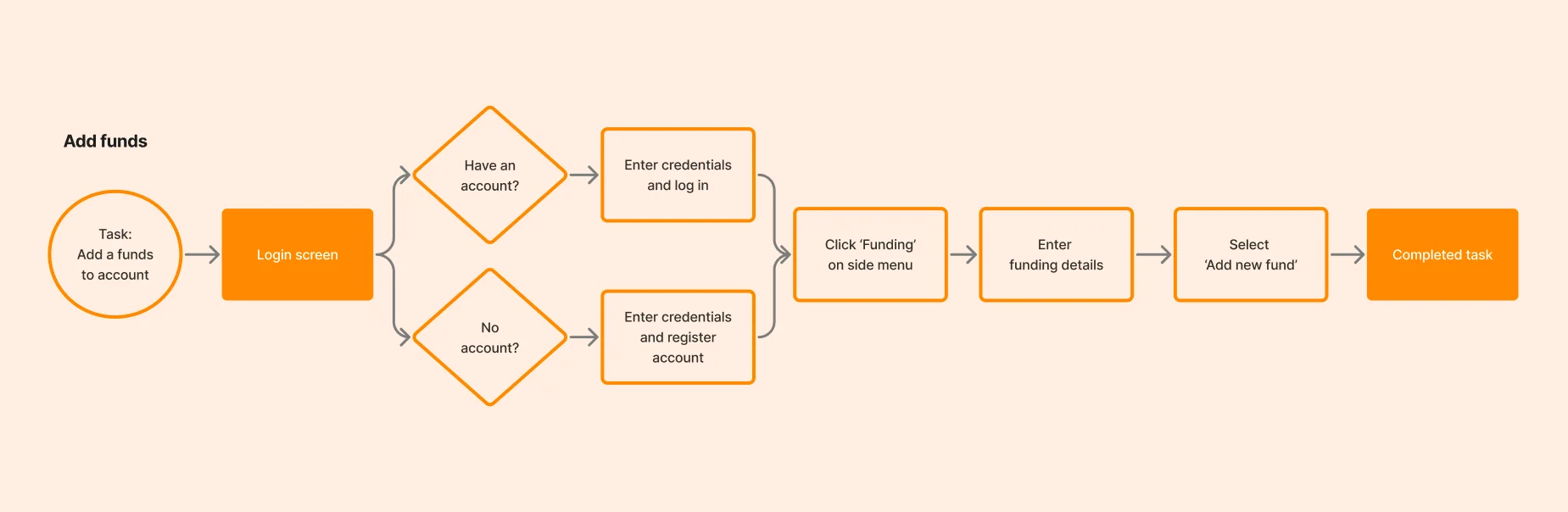
Add Funds Flow — designed to remove finance dependency
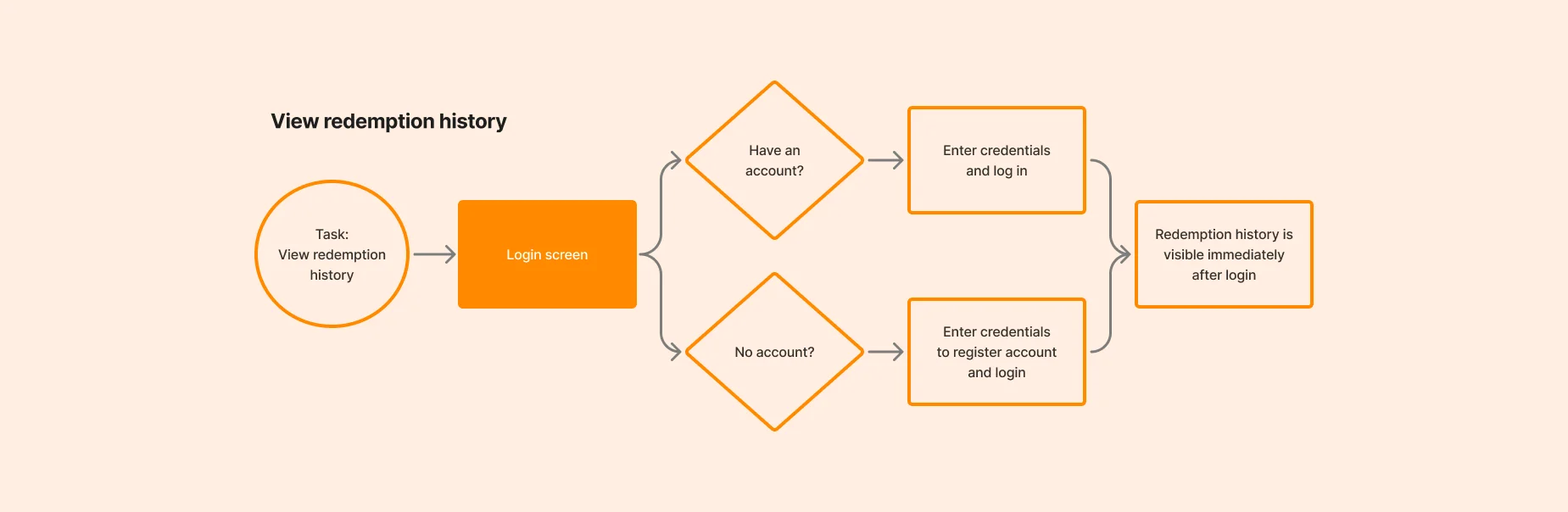
Gift Redemption History — instant visibility into program activity
Aligning the team on what ships first
I ran a MoSCoW prioritization workshop with product, engineering, and finance to align on v1 scope.
Must Haves
Should Haves
Could Haves
Won't Haves
What we cut from v1:
Audit trail: Engineering pushed for full history. We agreed to revisit if demand proved otherwise.
Mobile optimization: All users work from laptops, zero complaints in user research.
Advanced search/filtering: C-Suite stakeholders wanted regex queries but that would have delayed launch by at least 3+ weeks for <10% of use cases.
Onboarding wizard: An onboarding wizard would've added friction for the majority, so we optimized for power users instead, and planned on moving educational content to a help center.
Principles
Three constraints that shaped every decision
Before wireframing, I set design guardrails with the team. They were the filter we used to cut scope, resolve stakeholder pushback, and stay focused on v1.
🔓
Self-service over approval gates
Remove human dependencies wherever data supported it. If a client could safely do it themselves, we built that path.
🧭
Task-based nav, not role-based
Clients think in actions (add a user or check balance), not org chart labels. We organized around what they were trying to do, not who they were.
🎯
Fewer metrics, more confidence
More data creates noise, not clarity. We surfaced the minimum viable signal (balance, redemptions, trend) and cut everything else users didn't need.
Early wireframes prevented scope creep
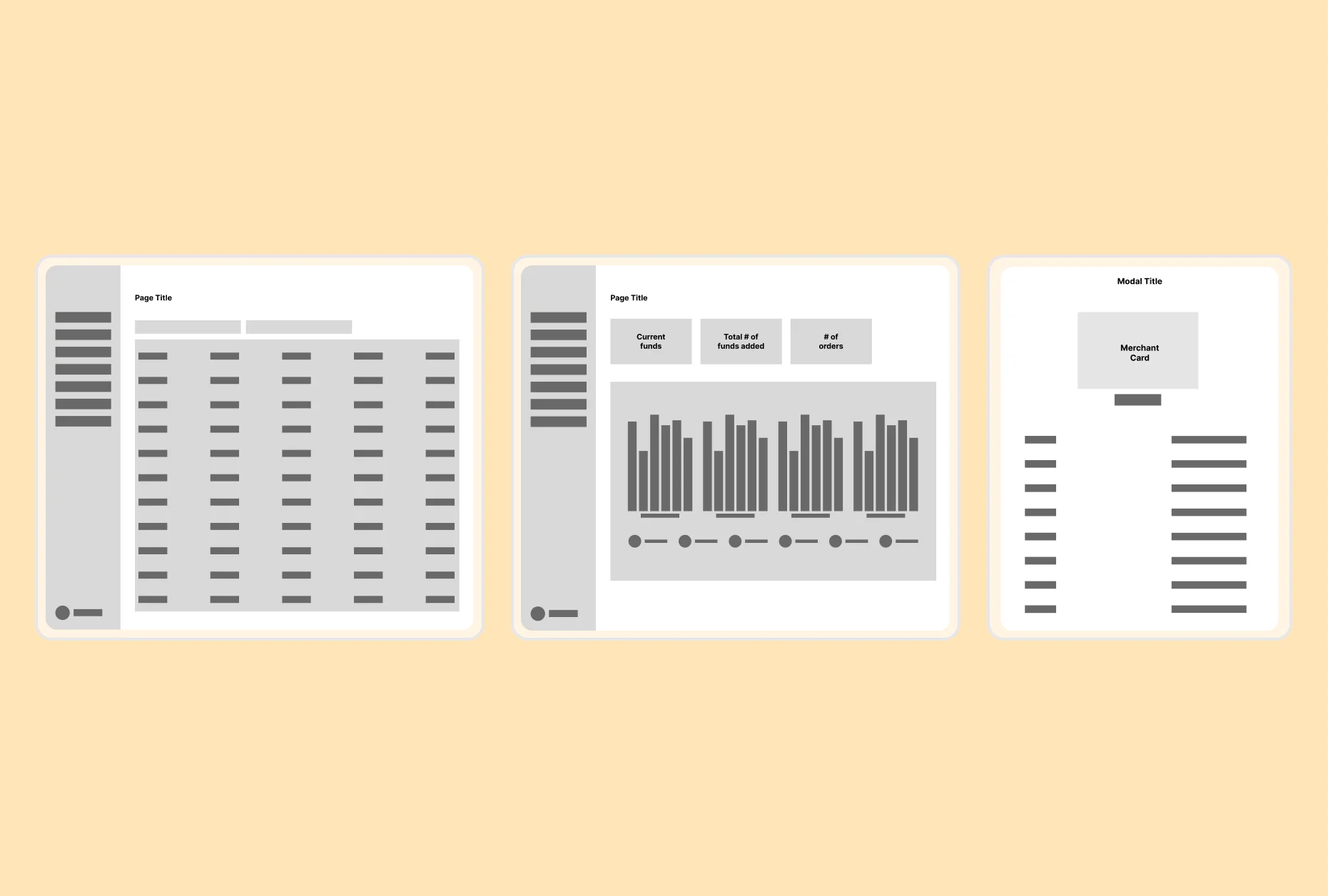
From research to decisions
The problem was dependency,
not complexity
Self-service funding as the v1 centerpiece, not a phase 2 feature
Design Decisions
How we eliminated bottlenecks
The admin portal gives client teams direct control over funding, users, and program monitoring. Three design decisions made this possible:
Self-service funding flow
Built direct account funding within the portal, eliminating the finance approval bottleneck. Clients wire funds, see balances update in real-time, and launch campaigns same-day instead of waiting 2–3 days for finance confirmation.
Tradeoff: No fraud detection in v1. Finance was nervous about removing approval gates, but historical data showed <1% of funding requests were ever flagged. We agreed to monitor transactions post-launch and add automated checks if patterns emerged. Six months in, zero fraud incidents.
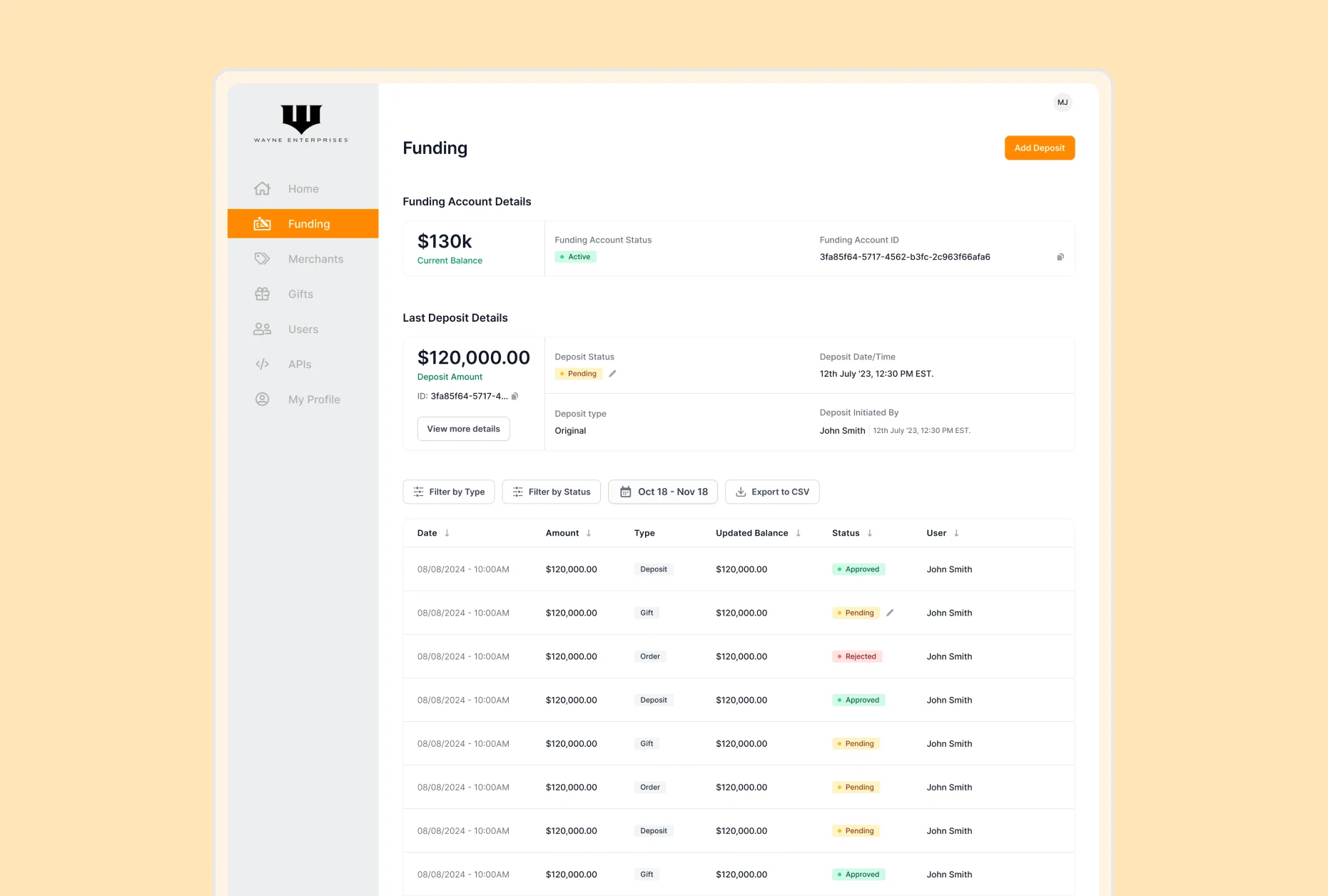
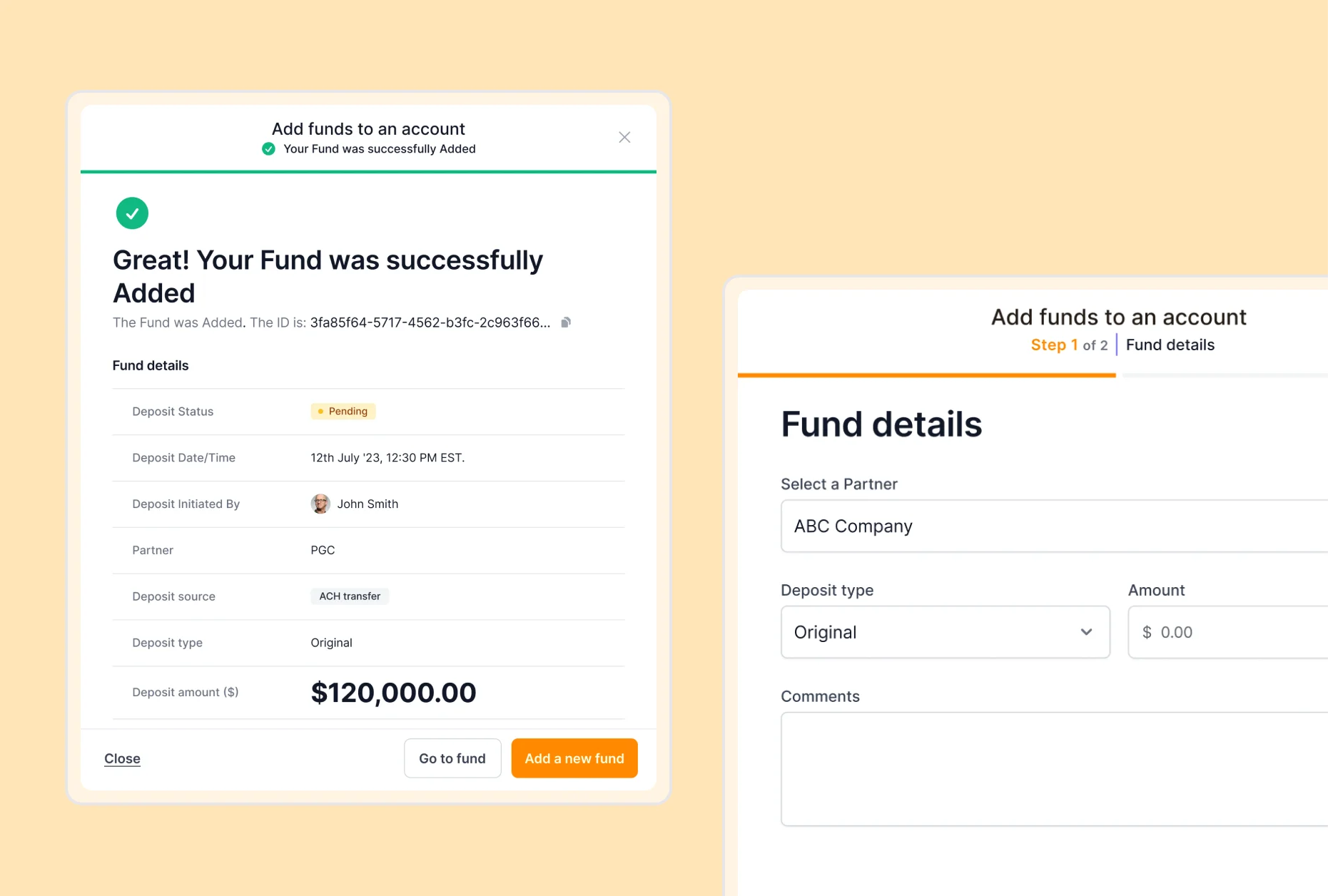
Admins fund accounts directly in the platform, bypassing finance entirely.
Navigation & Terminology
Navigation structure was informed by analyzing support tickets. The seven top-level sections directly mapped to the most common client requests. No hunting for frequently-needed actions buried in submenus.Tradeoff: Finance wanted "Admin" and "User" as separate items in the main navigation so role types were immediately visible. I combined them into a single "Users" section instead because splitting them would create artificial separation for what's fundamentally the same task: managing who has access to what. Clients don't think in terms of "I need to manage admins vs. users", they think "I need to add someone or change their permissions." A unified view reduced confusion and kept navigation from bloating.
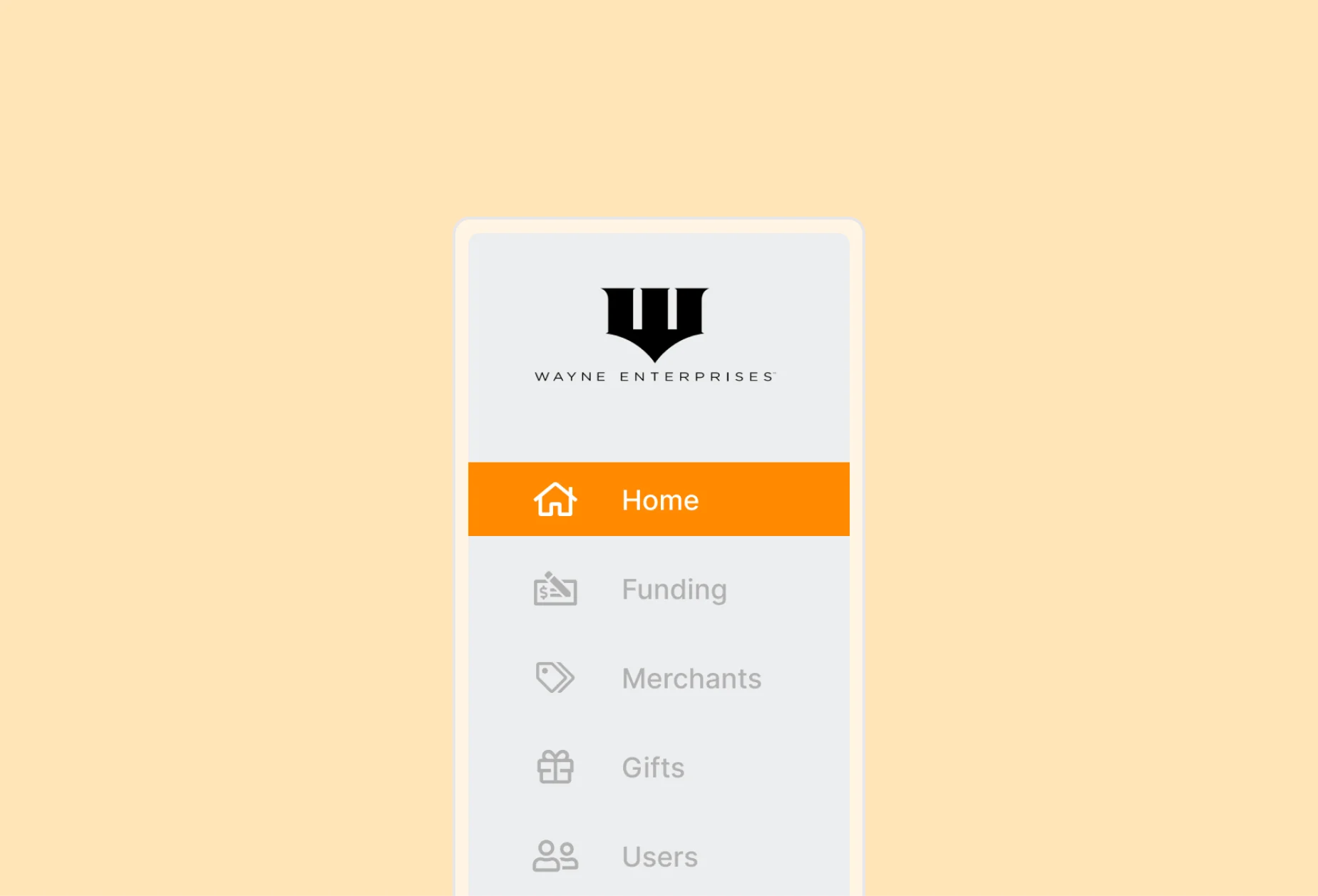
Simplified navigation gave users a clear mental model of the product
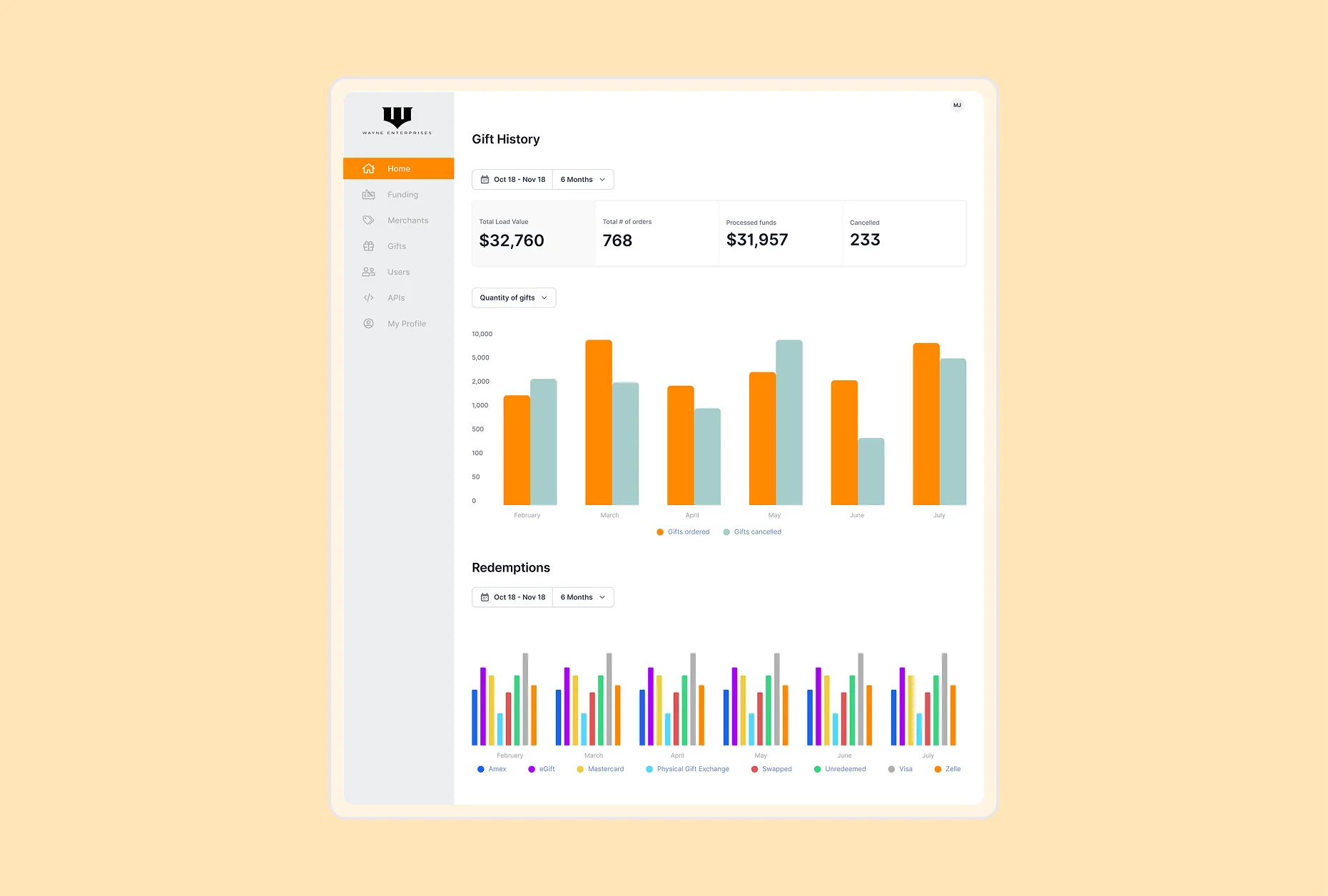
Dashboard gives teams immediate visibility into balances, trends, and activity

Here's the finished product in the real world
Outcome
Faster workflows and less dependency
Wolfe's finance team went from 8 hours a week on funding approvals to less than 1 hour. The support team could now focus on complex issues instead of routine account management requests.
⬇️
Support tickets dropped 65%
📋
90% of tasks completed in-platform
Clients now handle funding, user permissions, and activity monitoring without email support.
💰
Same-day account funding
Funding time went from 2–3 days to same-day. Clients can add funds and distribute gifts within hours instead of waiting for approvals.
⬆️
Higher self-service adoption
Dashboard usage increased 3x in the first month post-launch. Clients began proactively monitoring program health instead of reacting to issues.